Radio Frequency Identification Technology for Logistics, Tagging and EPC

A man, a Mazda, an RFID implant

Tuesday, March 31, 2009

Jon Oxer, who has been labeled “Australia’s geekiest geek” by a Sydney newspaper, has made some adjustments to his car. Most are not that surprising for a man who clearly takes his technology seriously: 24-hour internet access in Mazda RX-8 might be unusual, but not that extreme. The remote ignition controlled via his iPod Touch and iPhone could be considered downright handy.

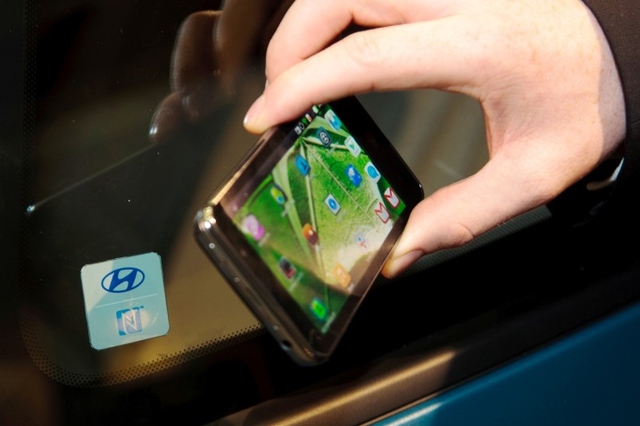
Then there is the keyless entry option. Oxer has installed an RFID reader on the window of his car which is interfaced to the car’s security system. This enables him to unlock his car with the RFID tag he has had implanted in his left arm.


Oxer has also modified his house to take advantage of the tag, which operates door locks and other features. The tag was implanted via a tool usually found in veterinary clinics.

Read more, and see his car project video here[end] 

A British scientist has implanted an RFID chip within himself that contains a computer virus; one which is reportedly able to infect RFID readers and even spread to RFID chips, according to a report from The H Security.

read more »

A group of engineers at the University of Pittsburgh have developed a system designed to enhance the track and trace of orthopedic implants with the power of RFID technology, reports PhysOrg.com.

read more »

A man in Perth, Western Australia has placed an RFID implant in his right hand, giving him keyless entry to his home and automobiles, reports The Sydney Morning Herald.

read more »

Due to an increase in the number of kidnappings, thousands of Mexicans are considering the option of under-the-skin tracking products such as satellite and RFID chip implants, reports The Washington Post.

read more »

Murata and Beta LAYOUT announced a joint venture to launch an RFID starter kit aimed at printed circuit board (PCB) engineers and developers aspiring to incorporate RFID into their electronics design.

read more »

Ortho-tag has announced that it will provide the University of Pittsburgh with Transcutaneous Near Field Communication (TNFC) technology in “smart” medical devices for orthopedic implants.

read more »