Radio Frequency Identification Technology for Logistics, Tagging and EPC

RFID enabled border crossings open

Thursday, November 20, 2008


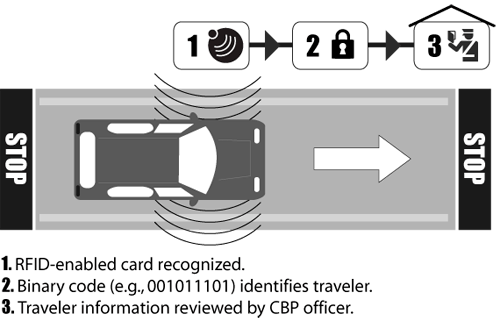
The first U.S. land border crossings using RFID and other information technology to capture, read and analyze traveler and vehicle information have opened in Blaine, Wash., and Nogales, Ariz.

These sites, equipped by Unisys to process secure Western Hemisphere Travel Initiative RFID-enabled travel documents which include U.S. passport cards and alternative documents, such as enhanced driver’s licenses, trusted traveler cards and border crossing cards, are designed to increase homeland security while minimizing delays to travelers crossing the land borders.


Unisys is deploying its WHTI RFID solution at 37 additional high-volume land ports of entry by June 2009, helping to improve officer safety and ability to assess risk, while enhancing homeland security.

Beginning June 1, 2009, U.S. citizens and Canadians entering the United States at sea or land ports of entry will be required to have a passport, passport card or WHTI-compliant document such as an enhanced driver’s license.

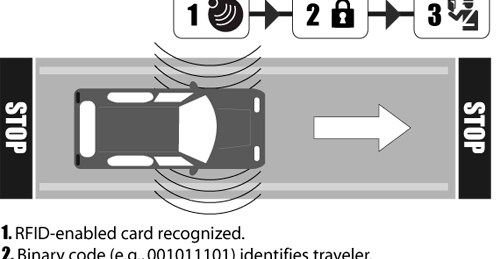
WHTI requires that individuals carry a passport card or other documents to reduce the opportunities for fraud or misrepresentation of one’s true identity. Unisys-deployed and managed card readers and supporting technology communicate RFID-stored traveler information to CBP, whose systems can confirm a WHTI document’s validity and assist in determining a traveler’s true identity. [end] 

Border control automation challenged by complex interoperability issues

By Nigel Reavley, Sales Director EMEA, FIME

The use of biometric technology in identity credentials is increasing. It aims to enable countries to implement robust security measures at border crossings and make it difficult to produce fraudulent travel documents. Today, more than 90% of passports deployed include biometric features, often fingerprint images due to their non-intrusive nature.

read more »

CBP denies report

A Canadian man uses a scanned image of his passport from his iPad to get past Customer and Border Protection officials, according to a report from the AP.

read more »

The U.S. Customs and Border Protection (CBP) agency is set to open a new Ready Lane at the San Ysidro port of entry for persons crossing the border with RFID-embedded travel documents.

read more »

The UK Border Agency has announced intentions to require applicants applying for six-month stays from outside the European Economic Area to use biometric residency permits starting at the end of February 2012, according to an HR Magazine article.

read more »

Some countries collect fingerprint or other biometric data from visitors but Afghanistan is going a step further a collecting the data from everyone entering or departing Kabul International Airport, according to the New York Times.

read more »

The U.S. Customs and Border Protection agency is working together with Unisys Corp. on a Land Border Integration (LBI) project to deploy one of the first pedestrian border crossings in El Paso, Texas.

read more »