Radio Frequency Identification Technology for Logistics, Tagging and EPC

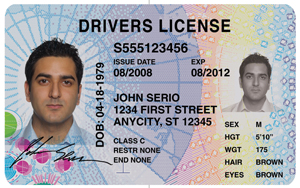
Michigan to issue enhanced driver license

Monday, October 13, 2008

The U.S. Department of Homeland Security reached an agreement with the state of Michigan to issue enhanced driver licesenses. Washington and New York are already issuing the documents that are acceptable alternative document for crossing the United States’ land and sea borders.

The new documents are called for under the Western Hemisphere Travel Initiative, which requires all citizens of the United States, Canada, Mexico, and Bermuda to have a passport or other accepted document that establishes the bearer’s identity and nationality to enter or depart the United States from within the Western Hemisphere.


The EDL uses a long-range RFID chip that can be read from 15 to 20 feet away. The chip contains no information other than a number that acts as a pointer to a record on a secure database that will contain the cardholder’s photo and other biographic information.

As a cardholder approaches the border crossing, the card is placed on the dashboard and is read as the car approaches the checkpoint. In theory, by the time the car pulls up to the border official, he will already have reviewed the information and determined whether the driver has viable credentials to cross the border.

The state of Michigan will develop an enhanced driver’s license that will provide residents, who voluntarily apply and qualify, with a document that is acceptable for use at U.S. land and sea ports. The enhanced driver’s license will cost more than a standard Michigan state driver’s license and will include security features similar to a U.S. passport and passport card.

Applicants for the enhanced driver’s license must provide proof of citizenship, identity, and residence. Michigan’s enhanced driver’s licenses will be designed consistent with the requirements of REAL ID.

Washington, Vermont, Arizona, and New York all have agreements in place with DHS to issue the documents. [end] 

By Neville Pattinson, vice president for Government Affairs and Business Development at Gemalto

The identity credential in the United States is evolving and it’s not hard to see why: the number of exposed identities in 2011 increased by more than 40% since 2010, from 16 million to 23 million, according to the IDTheftCenter.org. The Privacy Rights Clearinghouse tracked 535 breaches involving 30.4 million sensitive records in 2011 in the U.S. alone. That’s a conservative number because many states don’t require breaches to be reported.

read more »

British Columbia is moving forward with plans to upgrade its CareCard program. According to The Vancouver Sun, the new card will provide access to a variety of regional services including electronic health records, driver license and school registration for children.

read more »

Consumerist reports that Senator Bob Casey of Pennsylvania has written to Apple in hopes of getting the company to pull the “Driver’s License” app from its store.

read more »

The U.S. government has settled an infringement case with Leighton Technologies by agreeing to license its smart cards.

Leighton Technologies, a subsidiary of General Patent, filed a case against the federal government in the U.S. Court of Federal Claims in January 2010. Leighton alleged that 54 federal agencies used its six smart card patents without authorization. Leighton’s technology was also used in e-passports.

read more »

Datacard Group announced a contract award from the Société de l’assurance automobile du Québec (SAAQ) to upgrade to the Datacard MXD Card Delivery System and MXi Envelope Insertion System for enhanced card delivery and mailing for its driver licenses and identification cards.

read more »

With many states requiring voter ID cards, and if you’re a student, proof of enrollment, some colleges are offering students free cards that will enable them to vote.

read more »